
Meet the Speaker
Dr. Deshaies has directed basic and applied research programs for over 30 years, first as a professor and Howard Hughes Investigator at Caltech, and subsequently as the head of global research at Amgen. While at Caltech he co-conceived/developed proof-of-prinicple (with Craig Crews, Yale) for targeted protein degradation with PROTACs and co-founded two companies, one of which discovered and developed Kyprolis carfilzomib. His fundamental research at Caltech was recognized by election to the US National Academy of Sciences in 2016 and his applied research with Dr. Crews has been jointly honored by the Gabbay Award in 2023 and Passano Award in 2025. While leading global research at Amgen, his team advanced nearly 5 dozen clinical candidates, including Lumakras sotorasib, olpasiran, MariTide, xaluritamig, and AMG193.

Interview from 2025
How did you and Craig Crews come up with the idea for TPD?
Ray: Craig and I were both assistant professors at the time, around 1998, and had each received a Burroughs Wellcome Award for junior faculty. The awardees had to present posters at a yearly meeting, and our posters ended up next to each other because of alphabetical order. My lab had just published the discovery of the first member of the SCF ubiquitin ligase family in 1997, and I was studying how these ligases recruited substrates, particularly through phosphorylation motifs. Meanwhile, Craig had come from Stu Schreiber’s lab, where he had developed a “three-hybrid” yeast system to identify small molecules that could induce ternary complexes—essentially serving as molecular glues to bring proteins together.
When we met at the meeting, it was natural to connect our interests: could small molecules be used to recruit novel substrates to ubiquitin ligases, leading to their degradation? That conversation sparked the idea of targeted protein degradation. We quickly decided to test it. Craig had been working with a molecule called ovalicin, and my lab had all the assays for SCF ubiquitin ligases. We combined those strengths to design the first PROTAC: linking methionine aminopeptidase II to an SCF ligase via ovalicin and a phosphopeptide ligand. The idea really grew directly out of the intersection of our two research programs.
How does it feel to know that something that started so serendipitously is now on its way to actually help so many patients with life threatening diseases?
Ray: I’m very optimistic. Arvinas and Pfizer recently filed the NDA for vepdegestrant, and based on the data, I think they have a good shot at approval. While the market may be smaller than initially hoped—it seems most effective in ESR1-mutated breast cancer—it would still be an important milestone as the first prospectively developed degrader. Lenalidomide had shown that degradation could work, but its molecular glue degradationbased mechanism was discovered retrospectively. Vepdegestrant would be the first drug designed from the outset with this mechanism in mind, which is psychologically important for the field.
Beyond that, there are many other programs underway. When I last looked with Beacon Intelligence in October 2024, there were about 80 clinical programs targeting 35 different proteins, many of which are considered “undruggable” by conventional means. For example, Kymera’s work on IRAK4, a pseudo-kinase that can’t be targeted by ATP-competitive inhibitors, highlights how degraders can expand therapeutic reach. I expect those numbers have already grown since then, so the pipeline looks very promising.
Any challenges you foresee for the field in the coming years?
Ray: The main challenge is patience. Clinical development is long—typically five to seven years from entering the clinic to approval. Most degrader programs are still in Phase 1, so it will be another decade before we see broad impact on healthcare delivery. History bears this out. For monoclonal antibodies, the first approval was in 1986, but it wasn’t until Rituxan became a blockbuster in 2002 that the modality really began to transform treatment. Antibody-drug conjugates followed a similar 12–15 year timeline. The same with siRNA: Alnylam started around 2000, and the first approval didn’t come until 2017 and only in the last year or two are we seeing siRNA drugs hit blockbuster status.
So if vepdegestrant is approved, it will just be the beginning. It will likely take 10–20 years before degraders reach their full transformative potential. But the field is exploding, and the opportunity is enormous. Degraders open up targets like transcription factors, long considered “undruggable”—yet lenalidomide, which was one of the best-selling oncology drugs, works precisely by degrading a transcription factor. That’s why I think the future for this modality is very bright.

Explore the Agenda
Explore tracks spanning Research Breakthroughs, Discovery, Preclinical Development, Translational and Clinical Development, Latest Tools & Technology and the Future of Induced Proximity.
Partner With Us
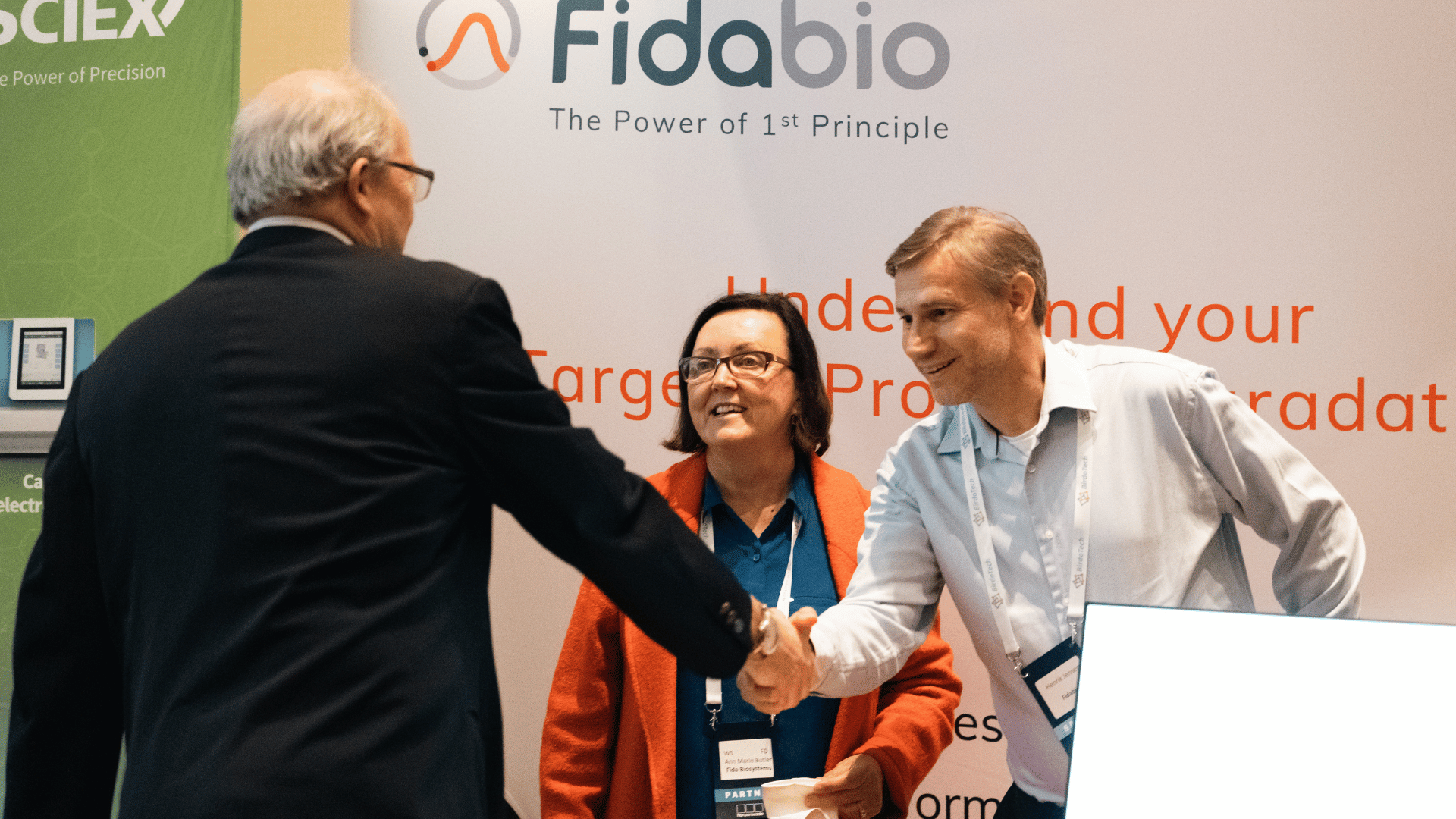
Position yourself alongside as the leading solution provider to ensure your brand is at the heart of TPD biopharma deals.
Join Biopharma Experts
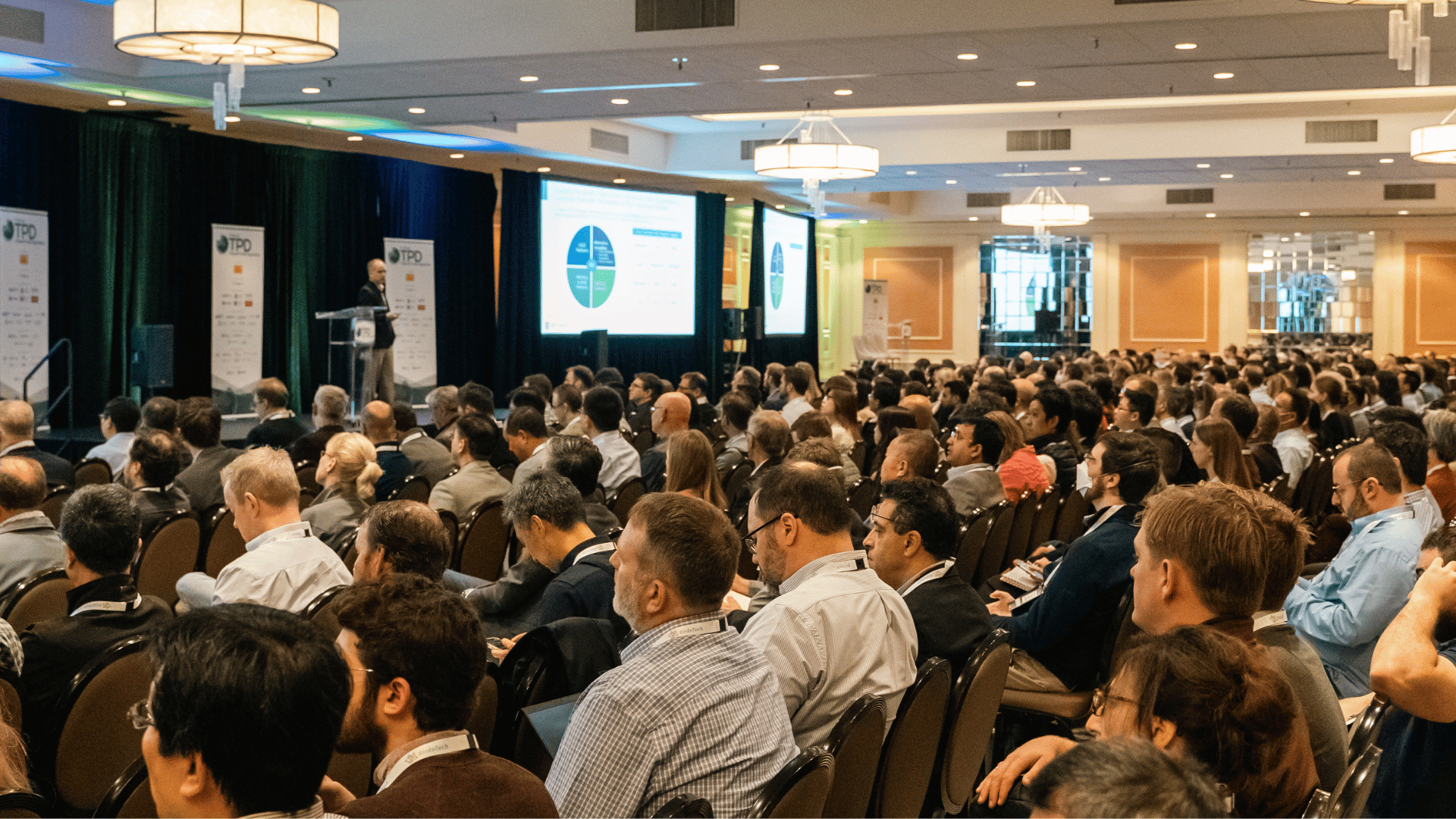
Be part of the hottest conversations with like-minded attendees spanning all stages of drug development and make critical connections during our dedicated networking sessions.